Kanji N5 refers to the beginner-level Chinese characters required for the N5 level of the Japanese Language Proficiency Test, used in the Japanese language. Kanji were originally introduced to Japan from China around the 5th century, and they became an essential part of the writing system for expressing meaning-based words such as nouns, verbs, and adjectives.
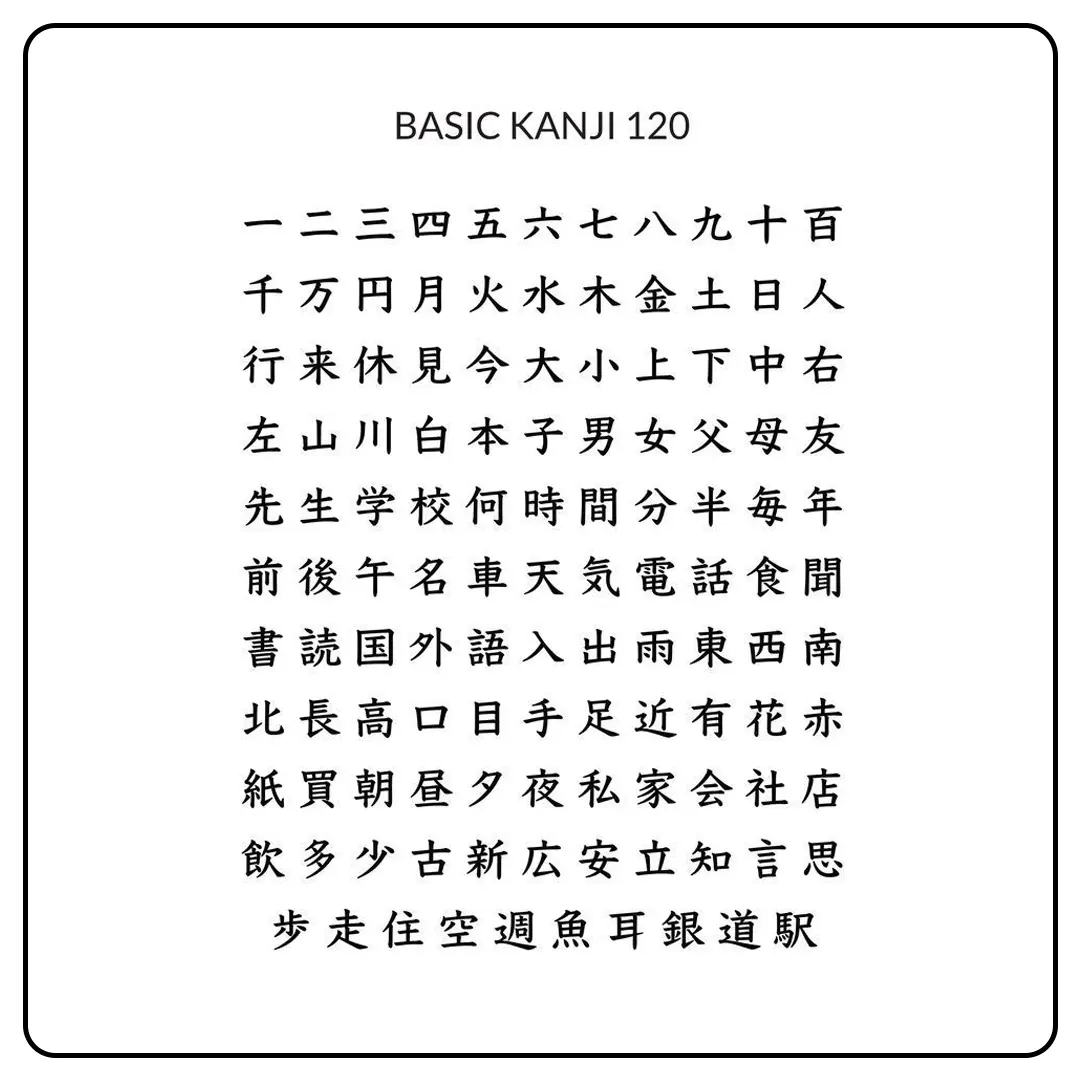
At the N5 level, learners study about 80–100 basic Kanji characters. Each Kanji carries its own meaning and may have more than one pronunciation depending on how it is used in a word. For example, a single character can represent ideas like “day,” “person,” or “water,” making reading more meaningful rather than purely phonetic.
Kanji N5 focuses on everyday vocabulary—numbers, directions, time, family, and common actions—helping beginners build a foundation for reading simple sentences, signs, and daily-life materials before advancing to higher levels of the JLPT (Japanese-Language Proficiency Test).